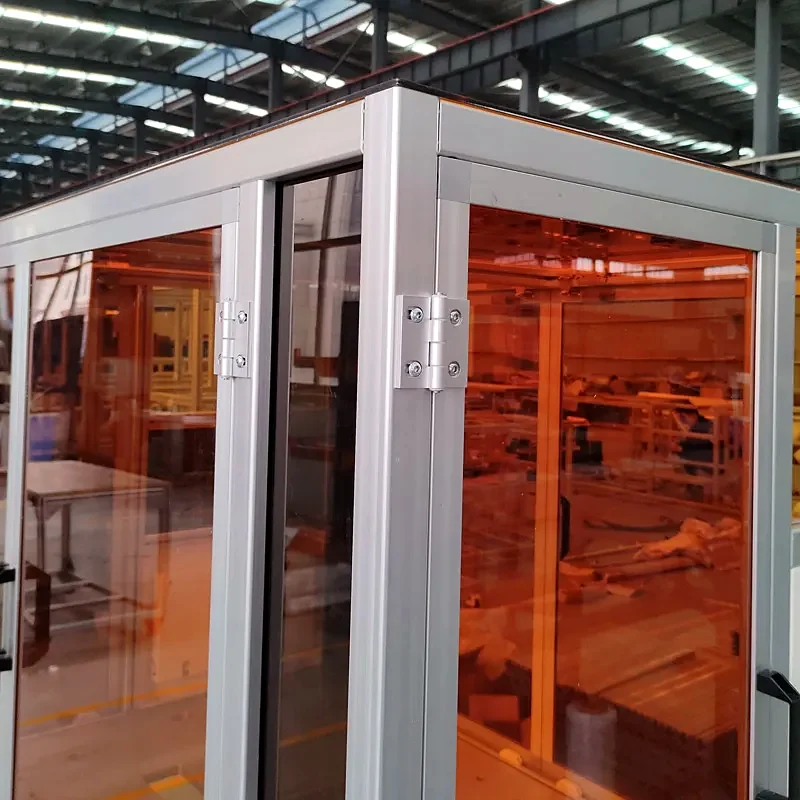
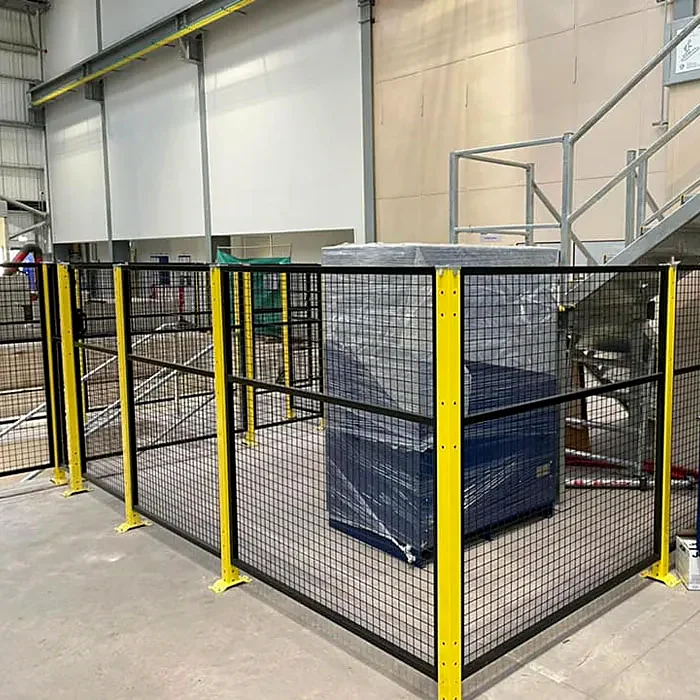
Control access to film, jaws, dies and cutters.
Form-fill-seal machines combine fast repetitive movement with heat, pressure and sharp cutting elements. The risk extends beyond the sealing area to film pull belts, unwind shafts, product dosing equipment and the path through which finished packs leave the enclosure.
The guarding concept follows the full product and film route. Infeed and discharge apertures are sized and positioned to prevent foreseeable access while allowing the intended product to move reliably.
- Film pull belts and driven rollers
- Cross-seal and longitudinal-seal assemblies
- Forming dies, cutters and perforators
- Pneumatic, servo and stored-energy movement
Design around reel change, threading and hygiene.
Reel loading and web threading often need wide, repeated access. A useful layout provides the working envelope, lifting route and sight lines needed for the real task, with the required machine state defined for each access mode.
Food and pharmaceutical applications may also require cleanable materials, sloped surfaces, controlled fasteners and resistance to washdown chemicals. These requirements should be captured before frames and panels are detailed.
- Film-reel lifting and shaft removal
- Web threading and tension adjustment
- Former, jaw and cutter cleaning
- Product-contact and allergen boundaries
Include the dosing and downstream interfaces.
A VFFS or sachet machine is often fed by a multihead weigher, auger, volumetric cup system or pump and connected to a checkweigher, metal detector or takeaway conveyor. Separate OEM guards can leave gaps or unclear stop behaviour at these interfaces.
We define the guarding boundary and access strategy across the assembled system, including elevated access, product chute openings and safe recovery after a blockage.
- Elevated feeder and platform access
- Product chute and hopper openings
- Checkweigher and metal detector transfers
- Safe reset after jam clearing