Industrial machine guarding · Oxfordshire based · UK-wide projects

Call 01865 416840   ·   sales@oxfordmachineguards.co.uk

Food, beverage and washdown environments

Hygienic Stainless Steel Machine Guards

Stainless-steel guarding developed around cleaning methods, hygiene zones, corrosion exposure and safe access to packaging machinery.

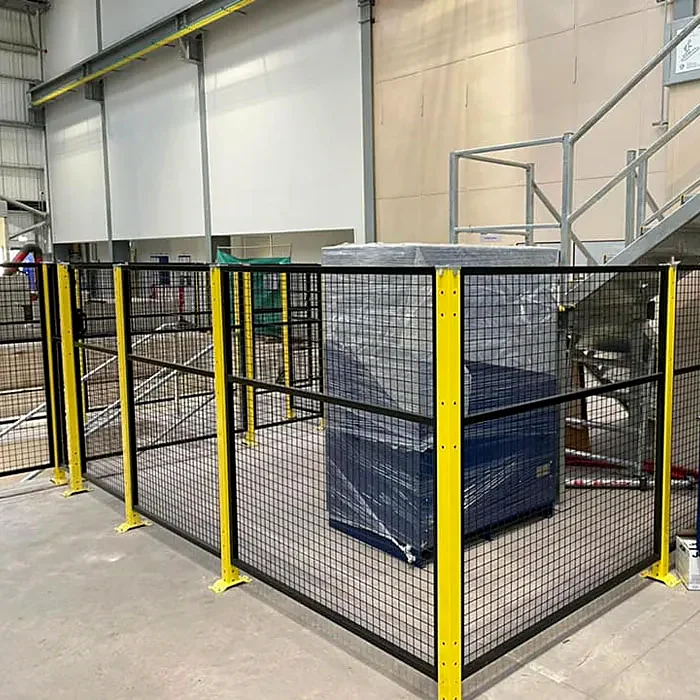
Black mesh fencing with yellow posts around a wrapped load beside factory stairs.
Project coverageOxfordshire based · UK-wide
Delivery scopeSurvey to installation
ApplicationsNew lines and retrofits
Design basisHazard · access · response

When should stainless-steel machine guarding be used?

Stainless steel is commonly selected where frequent washdown, moisture, cleaning chemicals, corrosion resistance or hygiene expectations make painted mild steel unsuitable. The correct grade and finish depend on the environment and cleaning regime.

Material choice alone does not make a guard hygienic. Frame profiles, joints, ledges, fasteners, floor interfaces and panel seals should also be reviewed for soil retention, drainage and access for cleaning.

  • Cleaning chemicals and concentration
  • Wet, dry or foam-cleaning method
  • Product and allergen exposure
  • Required surface finish

Keep cleaning access practical and controlled.

Packaging machinery often needs regular access to conveyors, filling zones, sealing areas and change parts. Guard doors and removable panels should support the documented cleaning task without encouraging operators to leave safeguards open or removed.

The access strategy can combine interlocked doors for routine tasks with tool-fixed panels for less frequent maintenance. Clear panels may preserve visibility, provided the material is compatible with impact, temperature and chemicals.

  • Cleaning route and frequency
  • Hose and service clearances
  • Routine versus maintenance access
  • Visibility during production

Design the boundary around product transfer.

Containers, pouches, film and cartons must cross guarded boundaries without creating a direct reach route to danger. Aperture size, distance, tunnels and conveyor side details are considered together.

Where food or drink packaging machinery is connected, the review should also cover traps at conveyor transfers and under-belt access. Guard details must remain robust after repeated cleaning and reassembly.

  • Infeed and outfeed apertures
  • Conveyor transfer points
  • Drainage and floor cleaning
  • Durable door and panel alignment

At a glance

What the design resolves.

Every arrangement is developed around the real machine, operating task, environment and required response.

Material selection

Stainless grade and infill chosen for the real exposure and cleaning method.

Cleanable details

Frames, fixings and interfaces reviewed to reduce inaccessible soil traps.

Visible process

Transparent areas can maintain a view of containers, product and film.

Planned access

Doors and removable sections placed around cleaning and changeover tasks.

Survey to handover

One controlled project pathway.

Scope boundaries and machine interfaces are agreed before manufacture and installation.

Survey

Record machinery, hazards, access routes, interfaces and site constraints.

Design

Develop the physical boundary, materials, access points and agreed control scope.

Manufacture

Fabricate frames, panels, doors and mounting details away from production.

Install

Fit the system within the agreed shutdown and coordinate machine interfaces.

Handover

Complete agreed checks and provide project and inspection information.

Direct answers

Questions about hygienic stainless steel machine guards.

Clear answers help buyers and engineering teams define the right next step.

Are all stainless-steel guards suitable for washdown?

No. Suitability depends on stainless grade, finish, joints, fasteners, infill, seals and the cleaning chemicals and pressures used. The complete construction needs to match the environment.

Can stainless frames use clear polycarbonate panels?

Yes, where the panel grade is suitable for impact, temperature and chemical exposure. The fixing and edge details also need to support cleaning and replacement.

Can hygienic guards be retrofitted to an existing line?

Often. A survey is used to confirm available space, fixing points, floor and drainage conditions, access tasks and machine-control interfaces.

Do you install stainless-steel guards across the UK?

Yes. Oxford Machine Guarding is based in Oxfordshire and undertakes machine guarding projects across Great Britain, subject to project scope and scheduling.

Related guidance

Continue the guarding review.

Explore connected project requirements and machine-specific guarding.

Discuss your project

Start with the machine, task and hazard.

Send photographs, a line layout and a short description. We will help define whether the right next step is a desktop review, site survey or guarding concept.

Representative application photography.

Call 01865 416840Send enquiry