Industrial machine guarding · Oxfordshire based · UK-wide projects

Call 01865 416840   ·   sales@oxfordmachineguards.co.uk

Liquid, paste, powder and granule filling

Filler Machine Guards

Guarding engineered around filling nozzles, pumps, pistons, augers, weigh systems, conveyors and the access needed for changeover and cleaning.

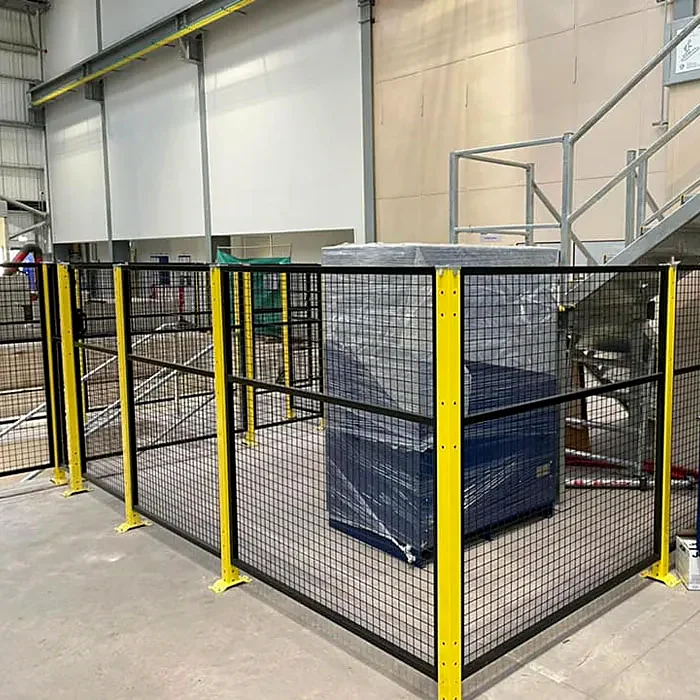
Black mesh fencing with yellow posts around a wrapped load beside factory stairs.
Project coverageOxfordshire based · UK-wide
Delivery scopeSurvey to installation
ApplicationsNew lines and retrofits
Design basisHazard · access · response

Control access without hiding the fill.

Filling equipment brings operators close to moving nozzles, indexing mechanisms, pistons, valves, pumps, augers and container-transfer systems. The guarding must reduce access to those hazards while retaining a clear view of container flow, fill quality and drips.

We position frames, clear panels and openings around the actual container path. Product infeed and outfeed apertures are reviewed against reach routes, while doors are arranged for nozzle change, strip-down and maintenance rather than simply fitted wherever a standard panel ends.

  • Nozzle movement and indexing hazards
  • Piston, pump and drive access
  • Bottle or container transfer openings
  • Drip-tray removal and spill management

Design around cleaning and product change.

The best guard is one that remains in use during everyday production. On filling machinery that means cleaning routes, format parts, recipe changes, product-contact components and washdown methods must be understood before fabrication.

Stainless frames, clear infill, open mesh or sheet panels can be combined according to the hygiene environment. Hinged access, removable sections and tool-fixed panels are selected in line with access frequency and the risk assessment.

  • Tool-free production access where safely justified
  • Removable panels for planned maintenance
  • Materials compatible with the cleaning regime
  • Clearances for hoses, pipes and services

Integrate access with the machine response.

Where opening a door can expose a person to hazardous movement, physical guarding and the safety-related control function need to be specified together. The design should define what stops, the safe state, run-down time, reset behaviour and which upstream or downstream equipment is affected.

Guard locking may be considered where a filler cannot reach a safe condition before access is possible. Final device selection depends on the machine and required performance—not on a generic guard-door package.

  • Interlocked doors and monitored hatches
  • Guard locking where run-down requires it
  • Reset positioned with a clear view of the zone
  • Recorded testing within the agreed project scope

Application review

Key design decisions.

These questions are resolved together because access, physical guarding and the machine response are interdependent.

Container openings

Control reach through bottle, pouch, tub or jar transfer apertures.

Change parts

Provide practical access to nozzles, guides, star wheels and tooling.

Product exposure

Select materials and details for liquids, powders, cleaning and corrosion.

Line response

Coordinate the filler stop with conveyors, cappers and accumulation.

Survey to handover

One engineering process.

The precise scope is agreed before work begins and adapted to the machine, site and modification boundary.

Survey

Observe machinery, hazards, tasks, access routes, interfaces and stopping behaviour.

Design

Develop the guarding arrangement, materials, access points and safety-function scope.

Manufacture

Fabricate frames, panels, doors, infills and mounting details away from production.

Install

Plan the shutdown, fit the system and integrate agreed interlocks or protective devices.

Handover

Record the agreed checks, provide project information and explain inspection needs.

Direct answers

Questions about filler machine guards.

Early decisions about access, stopping and machine interfaces shape the whole guarding project.

Can guards be fitted to an existing filling machine?

Usually, subject to survey. The available frame points, services, operator access, machine controls and effect of the modification all need to be reviewed before a retrofit design is finalised.

Can operators still see the filling nozzles?

Yes, where transparent panels are appropriate for the hazard and environment. Clear guarding is commonly used to maintain a view of containers, nozzles and product flow.

How is cleaning access maintained?

Door positions, removable panels, frame clearances and material choices are developed around the real cleaning procedure. The safeguarding response for opened access points is then defined accordingly.

Can the filler and capper share one guarded zone?

Potentially. The combined access routes, stop response, fault recovery and restart arrangements must be assessed for the connected machinery.

Related systems

Continue the guarding review.

Packaging hazards rarely stop neatly at the edge of one machine. Review the connected equipment and transfer points too.

Discuss your project

Discuss your filler machine guards project.

Send photographs, a line layout or a short description. We will help define whether the right next step is a desktop review, site survey or guarding concept.

Representative application photography.

Call 01865 416840 Send enquiry