Why use polycarbonate machine guards?
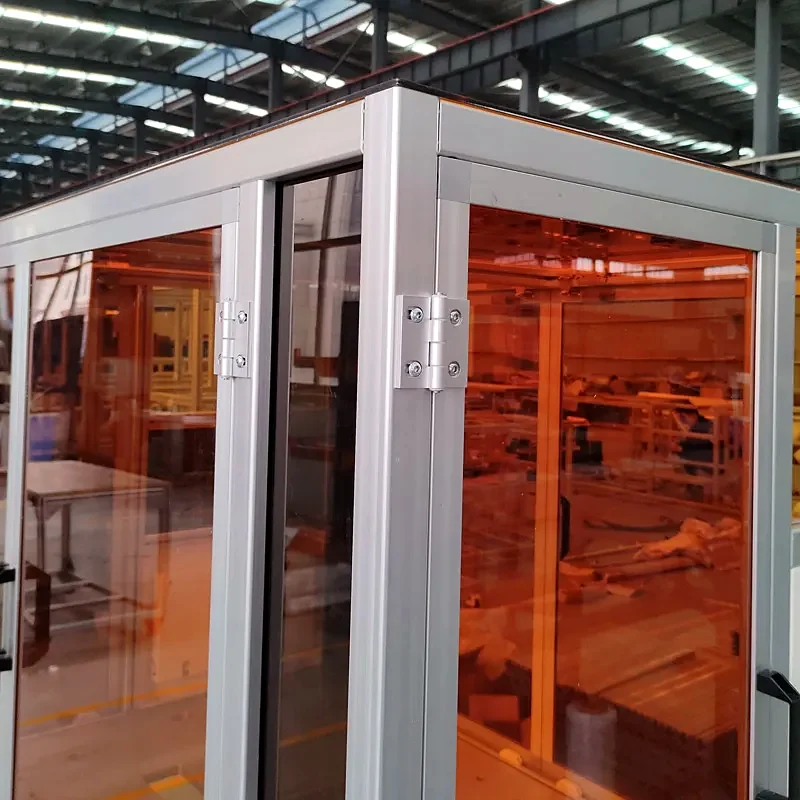
Polycarbonate can provide a clear, impact-resistant physical barrier while operators monitor container flow, label position, film tracking and machine condition. It is widely used within framed packaging-machine enclosures.
The panel specification should follow the hazard and environment. Thickness, span, mounting, impact potential, temperature, cleaning chemicals, scratch exposure and possible ejection all affect the final design.
- Required viewing area
- Impact and ejection potential
- Panel size and support
- Heat and chemical exposure
A clear panel still needs safe geometry.
Visibility does not replace the need to control reach. Panel edges, gaps around conveyors, door clearances and openings for product or services are checked against the route to the hazardous zone.
Frames and fixings should retain panels securely without making routine replacement unnecessarily difficult. Where panels form doors, hinge stiffness, latch alignment and interlock mounting are considered together.
- Safe distance from hazards
- Controlled gaps and apertures
- Secure framed mounting
- Practical panel replacement
Combine transparent and opaque infill where useful.
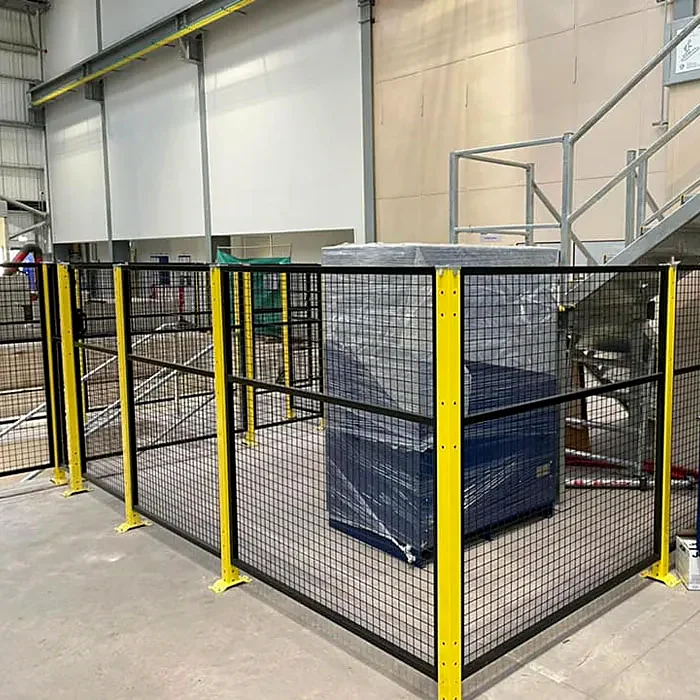
A full clear enclosure is not always the best answer. Mesh can support airflow, sheet infill can contain debris or discourage distraction, and stainless framing may be needed in wet environments.
A mixed construction places transparency where operators genuinely need a view. This can improve durability and cost control while preserving the protection and access strategy.
- Clear process windows
- Mesh ventilation areas
- Sheet-metal containment
- Mild-steel or stainless frames