Keep the label path visible.
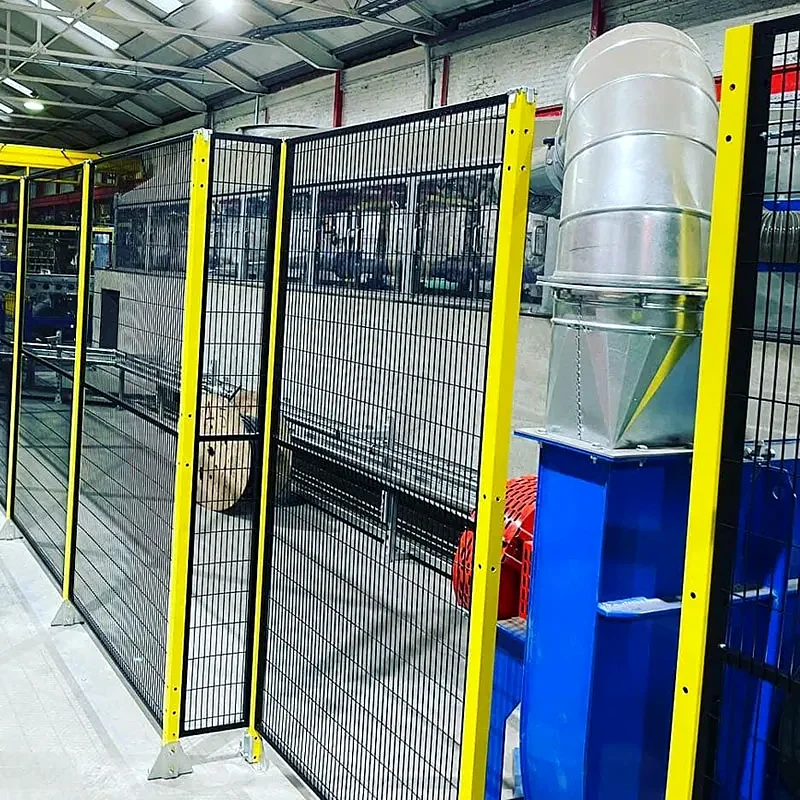
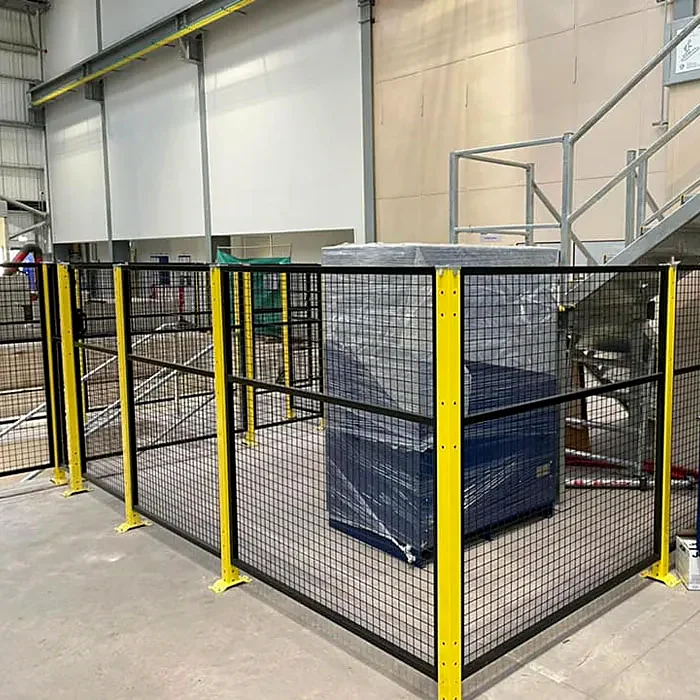
Operators need to see label tracking, web tension, container presentation and application quality. Transparent guarding can retain those sightlines while separating people from rotating rollers, wrap belts, timing screws, applicator mechanisms and driven conveyors.
The enclosure geometry is developed around the labelling head and the product path, with careful attention to gaps created by reels, printers, scanners and reject devices.
- Driven rollers, belts and wrap stations
- Timing screws and container spacing
- Applicator movement and tamp systems
- Reject mechanisms and collection areas
Allow fast, controlled reel changes.
Reel loading and web threading can require wide access. Door swing, handle position and frame clearance should make the intended procedure straightforward, while the interlock response prevents hazardous operation with the guard open.
Where threading or set-up requires controlled movement, the operating mode, speed, hold-to-run device and supervision need to be defined by the machine designer and risk assessment.
- Reel loading and backing-paper removal
- Web threading and tension adjustment
- Printer ribbon and consumable access
- Format rails, guides and sensor positioning
Coordinate inspection and reject equipment.
Modern labelling cells often include cameras, barcode readers, coders and pneumatic reject systems. Their positions can introduce extra openings or require frequent access to sensors and printheads.
We develop the guarding as a complete cell so inspection performance, reject collection, cleaning and maintenance access are considered without creating new reach routes to the label application machinery.
- Vision and barcode sightlines
- Coder and printhead maintenance
- Reject-bin access and confirmation
- Data and control-device mounting