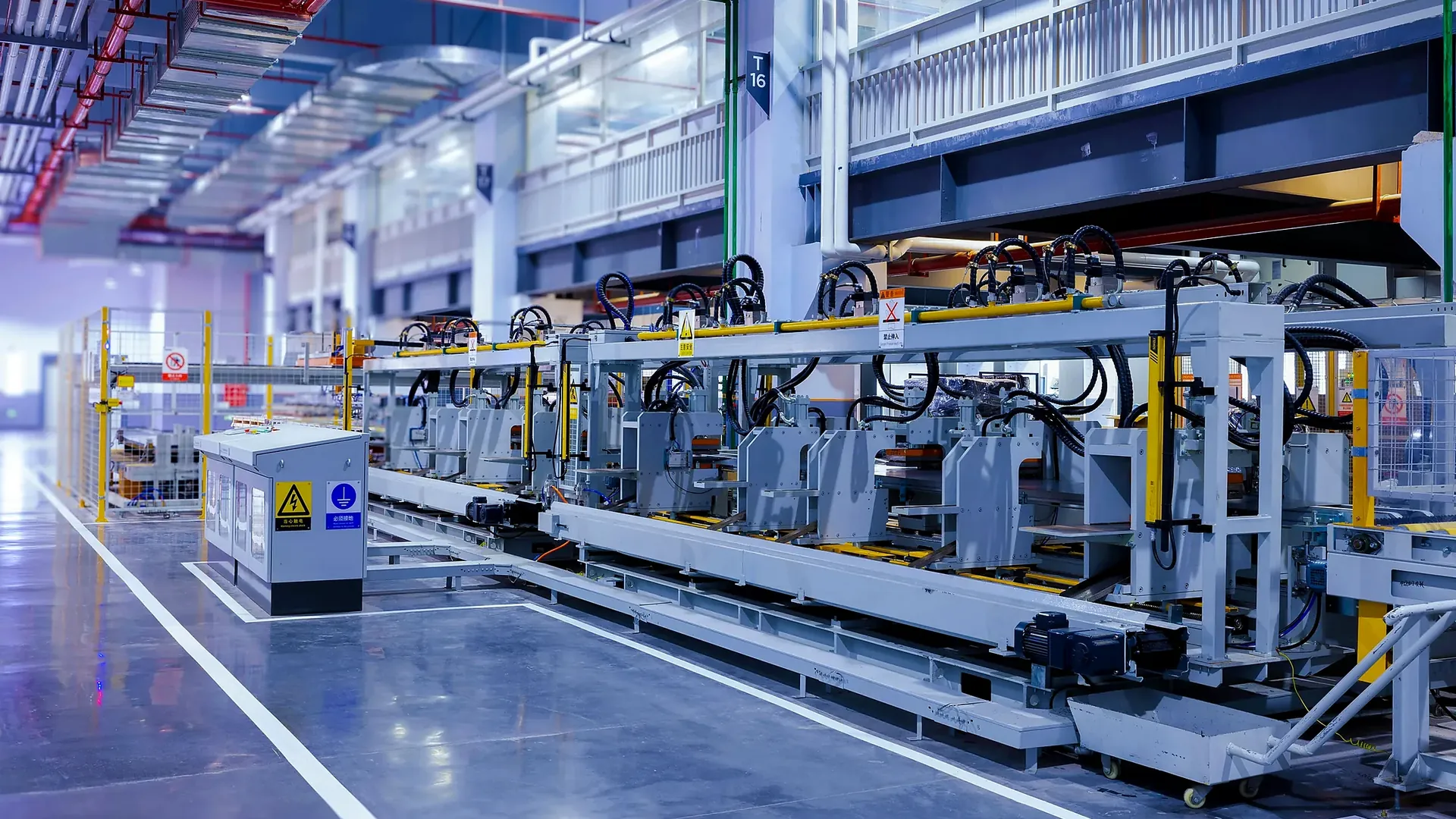
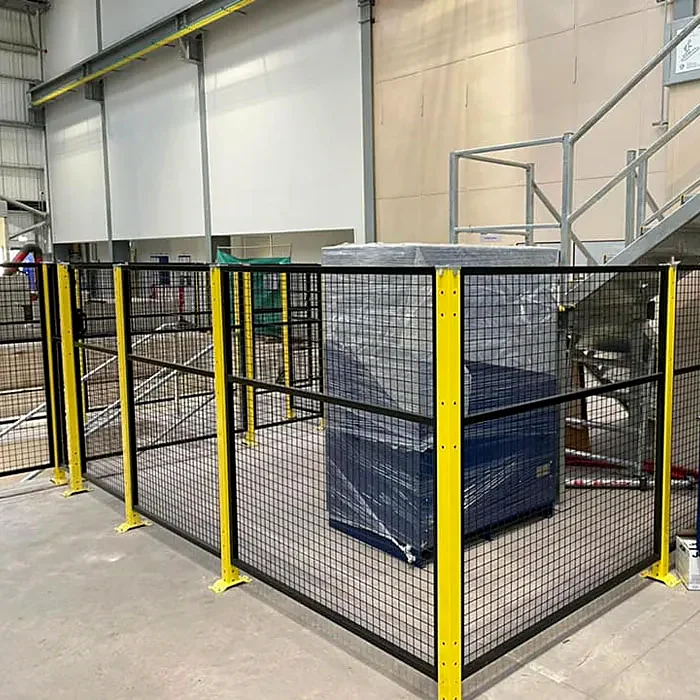
Separate people from jaws, cutters and drives.
Wrapping equipment can combine fast reciprocating sealing jaws, heated elements, blades, driven rollers, chains and film feed systems. The hazard may continue after a stop because of heat, gravity or mechanical run-down.
Guarding is developed around the product flow and the full machine cycle. Infeed and outfeed tunnels, film apertures and conveyor transfers are assessed so the wrapper does not gain an uncontrolled reach route at the point where packs enter or leave.
- Reciprocating and rotary sealing jaws
- Cutting blades and perforation units
- Film rollers, chains and drives
- Hot surfaces and shrink-tunnel interfaces
Keep film loading and changeover workable.
Film-roll replacement and web threading are common tasks that often need wide access. We position doors, removable covers and safe standing areas around the actual roll size, lifting method and threading path.
Transparent panels can maintain a view of film tracking and seal formation. Where set-up requires limited powered movement, the control mode and protective measures need to be specified by the responsible machine designer.
- Film-roll loading and lifting path
- Web threading and tension adjustment
- Change parts and pack-size settings
- Waste-film and offcut removal
Review the complete thermal and mechanical zone.
A wrapper may be connected directly to a shrink tunnel, powered conveyor, collating section or pallet handling system. The combined line should be reviewed for access beneath conveyors, between frames and through cooling or discharge openings.
Interlocked access may need to stop several motions while allowing a hot tunnel to remain under controlled conditions. The required safe state is therefore defined for the application rather than assumed to mean removal of all energy.
- Wrapper-to-tunnel transfer
- Cooling zones and discharge access
- Collators, pushers and product stops
- Safe state for heat and process equipment