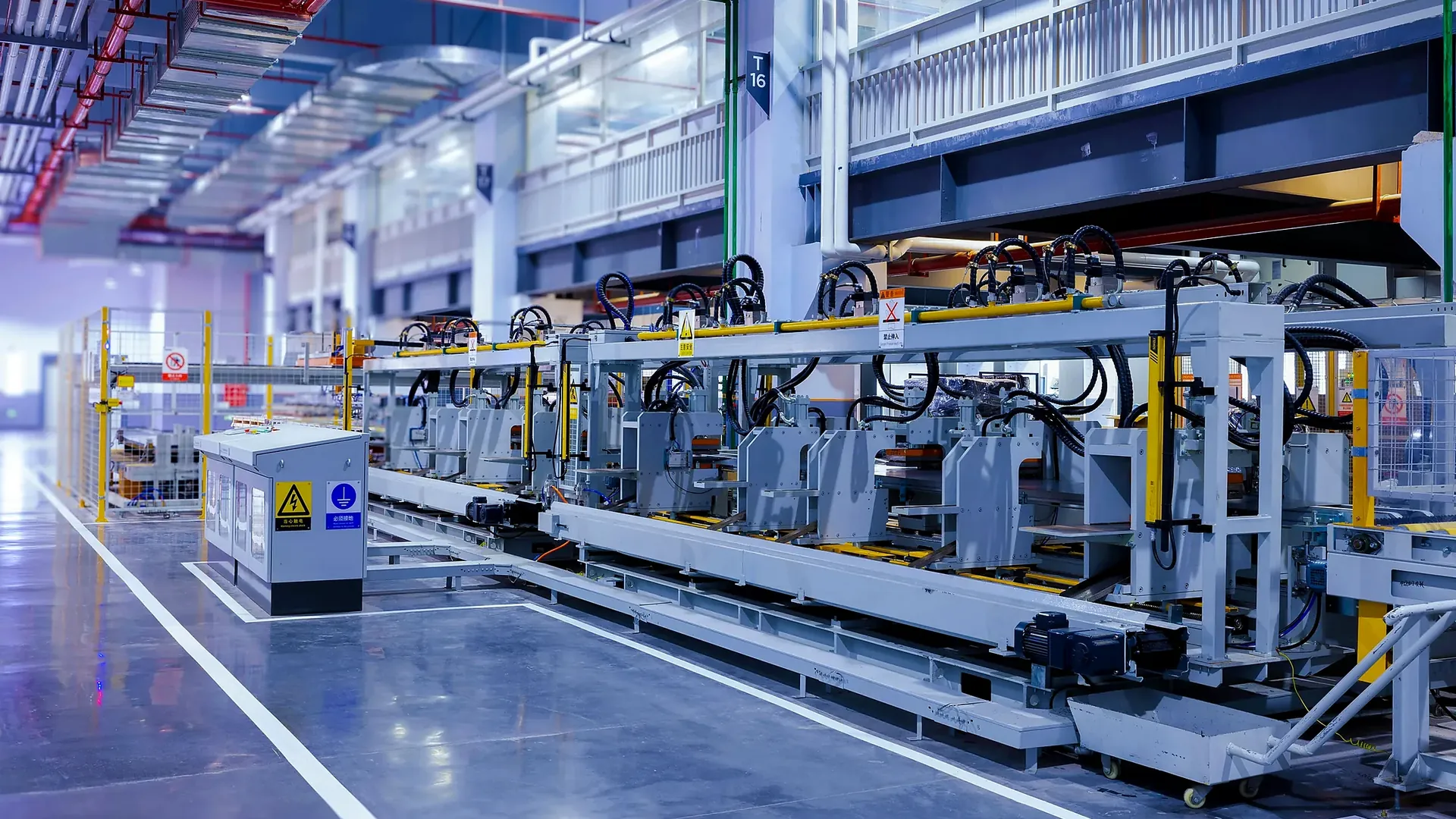
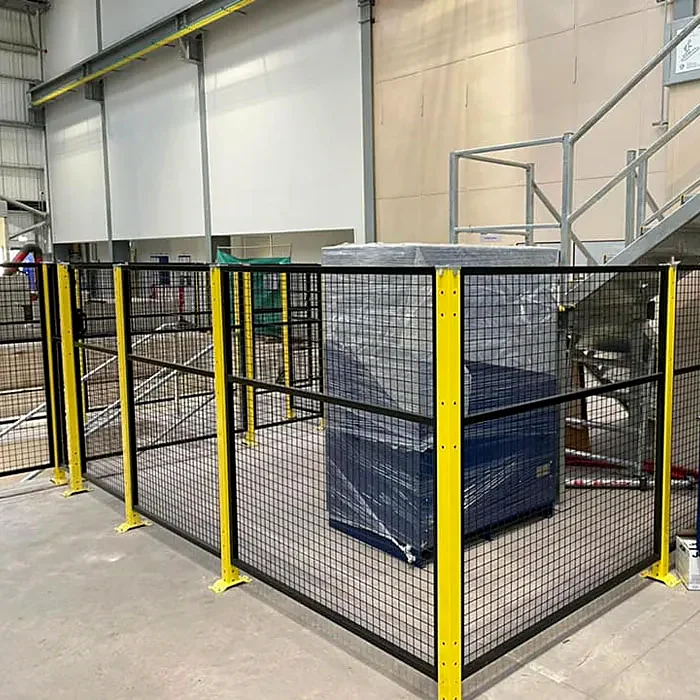
Follow the product from infeed to cut pack.
The infeed chain, pusher lugs and return sprockets can create drawing-in and trapping points before the product reaches the wrapping head. Further downstream, fin wheels, film pull rollers, sealing jaws and cutters operate quickly and may be hot.
Guarding should prevent access through the normal loading and discharge paths as well as from the sides and underside. The machine's existing covers, conveyor geometry and stopping time are reviewed as one sequence.
- Pusher chain and return sprockets
- Film pull rollers and fin-seal wheels
- Rotary or reciprocating end-seal jaws
- Knife, crimp and discharge mechanisms
Keep film threading and product changeover practical.
Film reels, forming boxes and web paths need frequent attention. Doors and panels should open where operators actually stand, without creating awkward reach or forcing guards to be removed for routine adjustments.
Clear panels support observation of film tracking and seal quality. Where limited movement is needed during setting, the operating mode and protective measures must be designed by the responsible control engineer rather than assumed from normal automatic operation.
- Reel change and lifting route
- Film threading and splice access
- Former and pitch adjustment
- Crumb, offcut and reject removal
Resolve the infeed and downstream interfaces.
Flow wrappers are often connected to automatic feeders, distribution conveyors, metal detectors, checkweighers and accumulation belts. These interfaces can introduce gaps, nip points and uncertain control boundaries.
A line review establishes which equipment must stop for each access point, where reset can be seen and how product openings are protected without creating repeated nuisance stops.
- Automatic feeder and distribution belts
- Wrapper-to-checkweigher transfer
- Metal detector and reject devices
- Accumulation and packing-bench interface