Industrial machine guarding · Oxfordshire based · UK-wide projects

Call 01865 416840   ·   sales@oxfordmachineguards.co.uk

Perimeter separation for packaging automation

Machine Safety Fencing for Packaging Lines

Modular and bespoke perimeter guarding for complete packaging lines, palletising cells, conveyor systems and automated equipment—designed around access, openings and stopping behaviour.

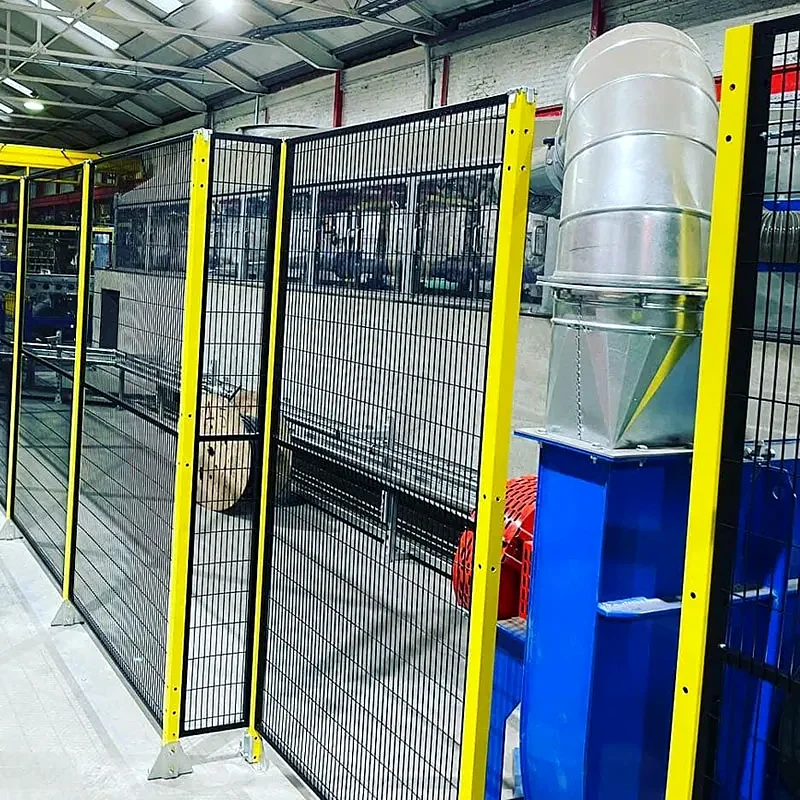
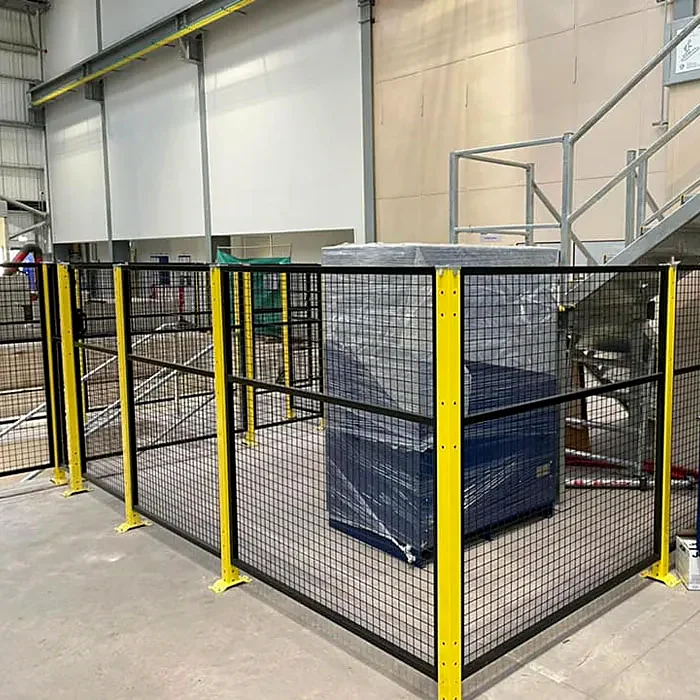
Equipment enclosed by black mesh fencing with yellow posts.
Project coverageOxfordshire based · UK-wide
Delivery scopeSurvey to installation
ApplicationsNew lines and retrofits
Design basisHazard · access · response

Direct answer

What is the difference between machine-mounted guards and perimeter safety fencing?

Machine-mounted guards sit close to a specific hazard; perimeter fencing creates a controlled boundary around a larger machine or automated zone. Packaging lines often use both: close guarding at local nips and openings, with perimeter fencing around robots, palletisers or connected equipment.

Send photographs or arrange an engineering review →

Technical context

HSE advises using fixed guards wherever practical and interlocked or protective-device solutions where fixed guarding cannot provide the access the task requires. Read the HSE machinery safety guidance.

This page is general guidance; the safeguarding solution must be based on the specific machine and current risk assessment.

Choose the boundary from the task and hazard.

Perimeter fencing can create a clear, maintainable boundary around a large packaging area, but panel height and mesh alone do not define a safe system. Safety distance, reach, climbing, gaps, floor clearance and openings for product flow all need consideration.

Close machine-mounted guards may still be required where a conveyor, drive or local mechanism sits outside the main fence or can be reached through an opening.

  • Fence position and safety distance
  • Mesh aperture and reach prevention
  • Floor, wall and overhead gaps
  • Local guards beyond the perimeter

Engineer gates, locks and restart together.

A gate must provide practical access for changeover, cleaning and maintenance while initiating the required machine response. Interlock selection, guard locking, escape release and key exchange depend on stopping time and whole-body access risk.

Reset stations are positioned so the person resetting can check the protected zone. Reset should restore the safety function without directly starting hazardous movement.

  • Hinged, sliding and removable access
  • Interlocks and guard locking
  • Escape release and trapped-person risk
  • Reset position and status indication

Keep products moving through a secure perimeter.

Packaging lines need openings for bottles, cases, pallets, conveyors, ducts and services. Each opening is assessed for reach or whole-body access using the expected product envelope and foreseeable abnormal conditions.

Tunnels, close-fitting infill, interlocked shutters, light curtains, scanners or muting can protect different transfer tasks. The correct choice is driven by risk and stopping performance.

  • Bottle, pouch and case transfers
  • Pallet infeed and discharge
  • Service penetrations and cable routes
  • Muting and protective-device integration

Engineering decisions

What must be resolved before manufacture.

The guarding, access and machine response are designed as one safeguarding system.

01 / Distance

Locate the fence so a person cannot reach the hazard through or over it.

02 / Height and aperture

Select panels from reach, climbing and process requirements.

03 / Gates

Provide access where tasks occur, not merely where panels fit.

04 / Openings

Control bottle, case and pallet routes through the boundary.

05 / Impact

Protect fencing and devices from forklifts and production traffic.

06 / Future change

Allow for planned formats, conveyors and maintenance access.

Application map

Hazard and safeguarding priorities.

This table supports early project scoping; it does not replace a machine-specific assessment.

Area or machineTypical concernDesign priority
Machine-mounted guardLocal moving parts and compact machineryClose-fitting frame, panel or cover
Perimeter fenceLarge machine, robot or multi-machine zonePanel system with controlled gates and openings
Hybrid systemPackaging line with local and cell-wide hazardsPerimeter plus bespoke infill and close guards
Open protective zoneFrequent material exchange or constrained layoutScanner/light-curtain solution subject to stopping and environment

Direct answers

Questions about machine safety fencing for packaging lines.

Clear early answers help define the right survey, design and installation scope.

Is mesh fencing suitable for a packaging line?

Often. Mesh provides ventilation and visibility, but aperture, distance, contamination, ejection and cleaning requirements determine whether mesh, clear panels, sheet or a combination is appropriate.

How high should machine safety fencing be?

There is no single universal height. The design must consider the hazard, distance, ability to reach over or climb, adjacent structures and foreseeable access routes.

Do all access gates need guard locking?

No. Guard locking is considered where hazardous movement does not stop before a person can reach it or where process needs justify controlled release. The risk assessment and stopping performance determine the requirement.

Can fencing be installed around an operating line during a shutdown?

Yes. Accurate survey and off-site manufacture can reduce site work. Installation sequence, temporary boundaries, services, floor fixing and commissioning must be planned before the shutdown.

Related systems

Continue the guarding review.

Packaging hazards often cross machine boundaries, so connected equipment and access tasks should be reviewed together.

Discuss your project

Discuss perimeter fencing for your packaging line.

Send photographs, a line layout or a short description. We will help define whether the right next step is a desktop review, site survey or guarding concept.

Representative application photography.

Call 01865 416840Send enquiry