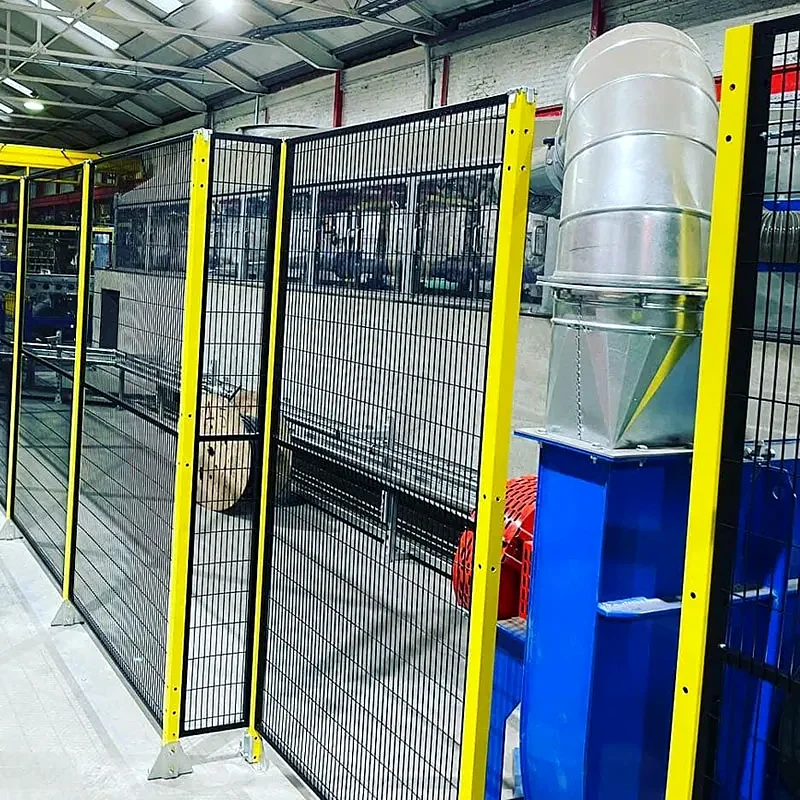
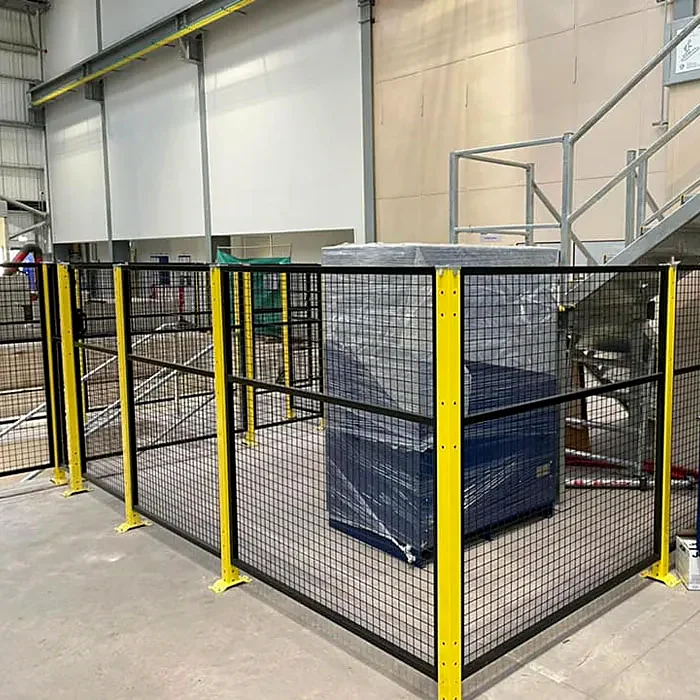
Control whole-body access and unexpected movement.
Palletising cells contain large moving envelopes and can trap a person between transfer heads, loads, pallets, fencing and fixed structures. Pneumatic, hydraulic and gravitational energy may remain after a normal stop.
The safeguarding concept separates routine material flow from human access. Gates, transfer openings and protective devices are positioned around foreseeable intervention, maintenance and pallet recovery—not only the normal automatic cycle.
- Robot and end-effector reach
- Layer sweeps, lifts and transfer heads
- Pallet magazines and dispensers
- Stored energy and falling-load risk
Engineer pallet openings as safety functions.
Finished and empty pallets must cross the perimeter without creating an uncontrolled person-access route. Depending on the process, a transfer can use shaped tunnels, interlocked doors, light curtains, scanners, muting or sequenced barriers.
Sensor geometry, direction logic, timing, fault response and restart conditions must support the intended transfer. Production detection should not defeat the safety function.
- Loaded and empty pallet envelope
- Muted light-curtain sequence
- Scanner protective fields
- Door, shutter or tunnel arrangement
Separate people, forklifts and automated equipment.
Fork-truck impact and pedestrian access can damage fencing or safety devices and create unsafe restart situations. The project therefore reviews vehicle approach, barrier protection, gate use and the operator's view of the full cell.
Where whole-body access is possible, reset and escape arrangements need special attention. A reset should confirm the safeguarding condition without itself initiating hazardous movement.
- Fork-truck and pedestrian routes
- Impact protection for posts and devices
- Trapped-person and escape considerations
- Visible reset and zone status