Industrial machine guarding · Oxfordshire based · UK-wide projects

Call 01865 416840   ·   sales@oxfordmachineguards.co.uk

Automatic stretch wrapping and pallet handling

Pallet Wrapping Machine Guards

Safeguarding for turntable, rotary-arm and ring pallet wrappers, including conveyors, film carriages, transfer openings and access for film change and fault recovery.

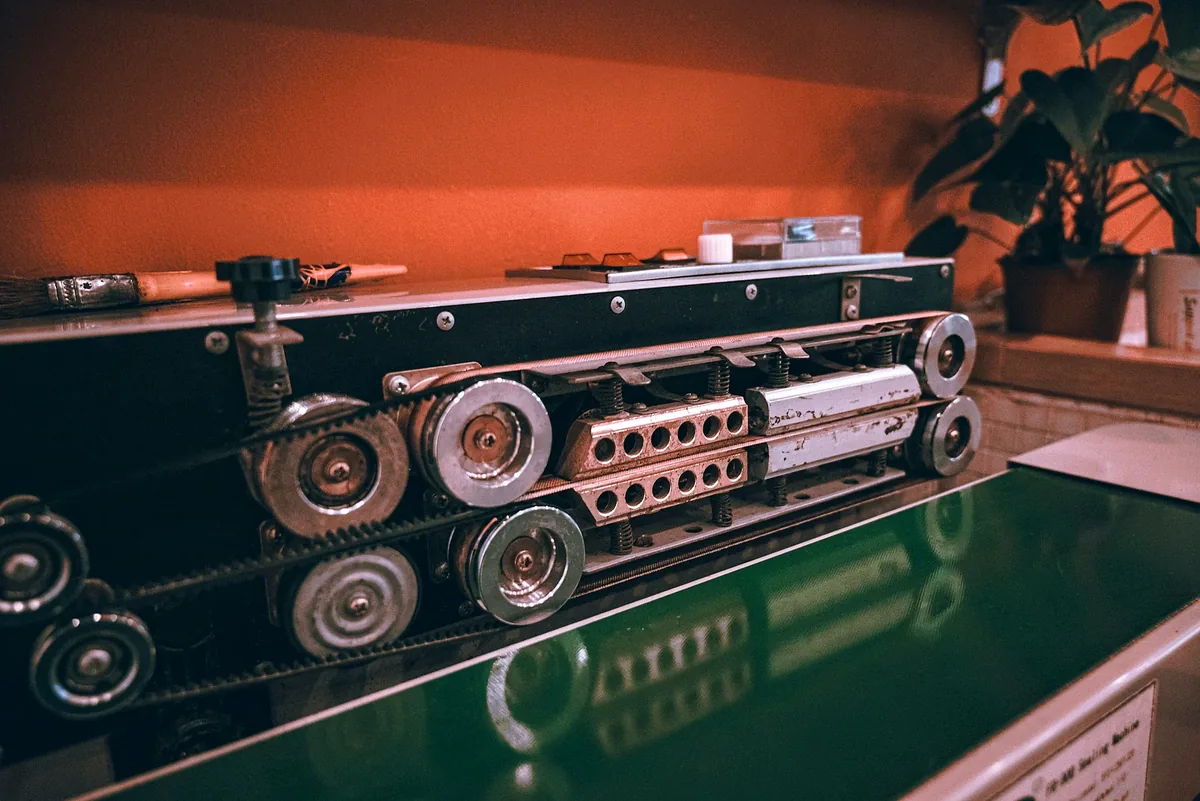
Exposed rollers, gears and belt on industrial machinery.
Project coverageOxfordshire based · UK-wide
Delivery scopeSurvey to installation
ApplicationsNew lines and retrofits
Design basisHazard · access · response

Direct answer

When does a pallet wrapping machine need perimeter guarding?

Automatic and conveyor-fed pallet wrappers commonly require an engineered boundary because rotating loads, arms, rings, film carriages and pallet movement can expose people to trapping or impact. The solution may combine fencing, gates, scanners, light curtains and protected transfer openings.

Send photographs or arrange an engineering review →

Technical context

HSE identifies pallet wrapping machinery as a distinct packaging-machine category requiring specific safeguarding consideration. Read the HSE packaging machinery guidance.

This page is general guidance; the safeguarding solution must be based on the specific machine and current risk assessment.

Separate people from moving loads and wrapping mechanisms.

Pallet wrappers can rotate a heavy load or move an arm or ring around it at speed. Film carriages travel vertically, powered conveyors index pallets and automatic clamp or cut mechanisms create additional trapping and cutting hazards.

The guarding boundary is based on the full movement and load envelope, including unstable loads, damaged pallets and foreseeable overhang—not only the machine frame.

  • Turntable, arm and ring movement
  • Vertical film-carriage travel
  • Automatic clamp, cut and wipe devices
  • Powered pallet conveyors and centring

Protect pallet openings without blocking flow.

Conveyor-fed systems need openings large enough for the pallet and load. These openings can also allow whole-body access unless protected by distance, tunnels, doors, light curtains, scanners, muting or sequenced devices.

The transfer design must account for different pallet sizes, load heights, film tails and conveyor accumulation while maintaining a defined safe response to a person entering the protected zone.

  • Maximum pallet and load envelope
  • Infeed and outfeed opening geometry
  • Muting or scanner sequence
  • Accumulation and blocked-pallet recovery

Make film change and recovery safe and efficient.

Operators need access to replace film, retrieve broken film and clear pallets. Gates and protective fields are positioned around these tasks with clear status and reset arrangements.

Where forklifts serve the wrapper, impact protection and pedestrian segregation help preserve the integrity of fencing, scanners and controls.

  • Film-roll loading and lifting
  • Broken-film and pallet recovery
  • Gate, reset and restart visibility
  • Forklift approach and impact protection

Engineering decisions

What must be resolved before manufacture.

The guarding, access and machine response are designed as one safeguarding system.

01 / Machine type

Turntable, rotary-arm and ring wrappers create different moving envelopes.

02 / Load envelope

Include pallet overhang, unstable cases and abnormal load conditions.

03 / Transfer opening

Prevent access while preserving reliable pallet throughput.

04 / Film handling

Provide safe access to rolls, clamps, cutters and broken film.

05 / Detection

Define scanner, light-curtain and muting behaviour for people and loads.

06 / Vehicle route

Separate forklifts, pedestrians and vulnerable safety equipment.

Application map

Hazard and safeguarding priorities.

This table supports early project scoping; it does not replace a machine-specific assessment.

Area or machineTypical concernDesign priority
Turntable wrapperRotating pallet, pinch points and film carriageBoundary or detection sized to load and operator route
Rotary-arm wrapperSweeping arm, load and carriage movementPerimeter guarding with controlled pallet transfer
Ring wrapperHigh-speed rotating ring and film headFull enclosure or perimeter system with service access
Conveyor-fed wrapperOpenings, accumulation and forklift interactionTransfer safeguarding, muting and impact protection

Direct answers

Questions about pallet wrapping machine guards.

Clear early answers help define the right survey, design and installation scope.

Can a semi-automatic turntable wrapper need guarding?

Possibly. The machine, load, operating method and people working nearby must be assessed. Automation level alone does not determine the safeguarding requirement.

How do pallets enter and leave a guarded automatic wrapper?

Transfer openings can use distance, tunnels, interlocked barriers, light curtains, scanners or muting. The method must distinguish legitimate loads from unsafe access and deliver the required stop response.

Can film rolls be changed without entering the full cell?

Often the layout can place film loading at a controlled boundary or dedicated access gate. The best arrangement depends on carriage position, roll weight, lifting method and wrapper design.

Can pallet wrapper guards be integrated with a palletiser?

Yes. A combined end-of-line cell can coordinate palletiser, conveyors, wrapper, labeller and discharge zones, provided responsibilities and safety functions are defined for the complete assembly.

Related systems

Continue the guarding review.

Packaging hazards often cross machine boundaries, so connected equipment and access tasks should be reviewed together.

Discuss your project

Discuss your pallet wrapper guarding project.

Send photographs, a line layout or a short description. We will help define whether the right next step is a desktop review, site survey or guarding concept.

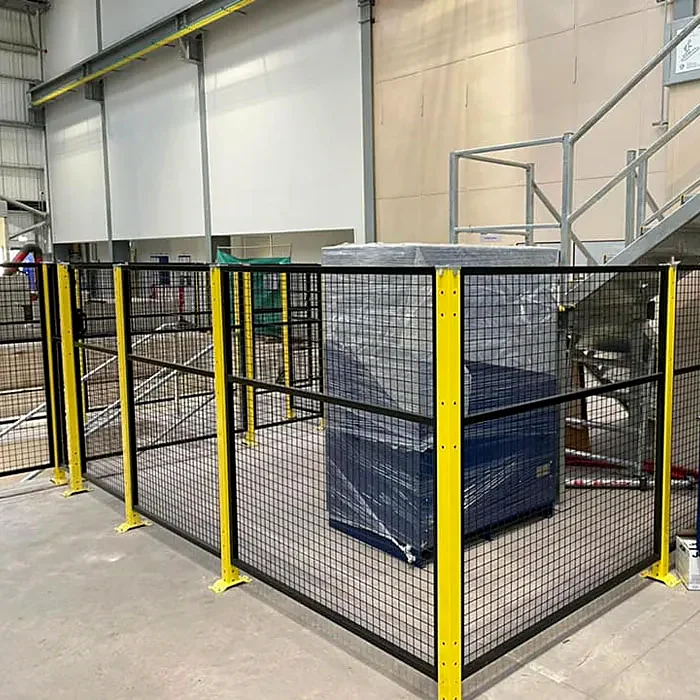
Representative application photography.

Call 01865 416840Send enquiry